

Hololight Closes the Enterprise XR Performance Gap with Sub-50ms* Streaming and 400,000-Part* Scale
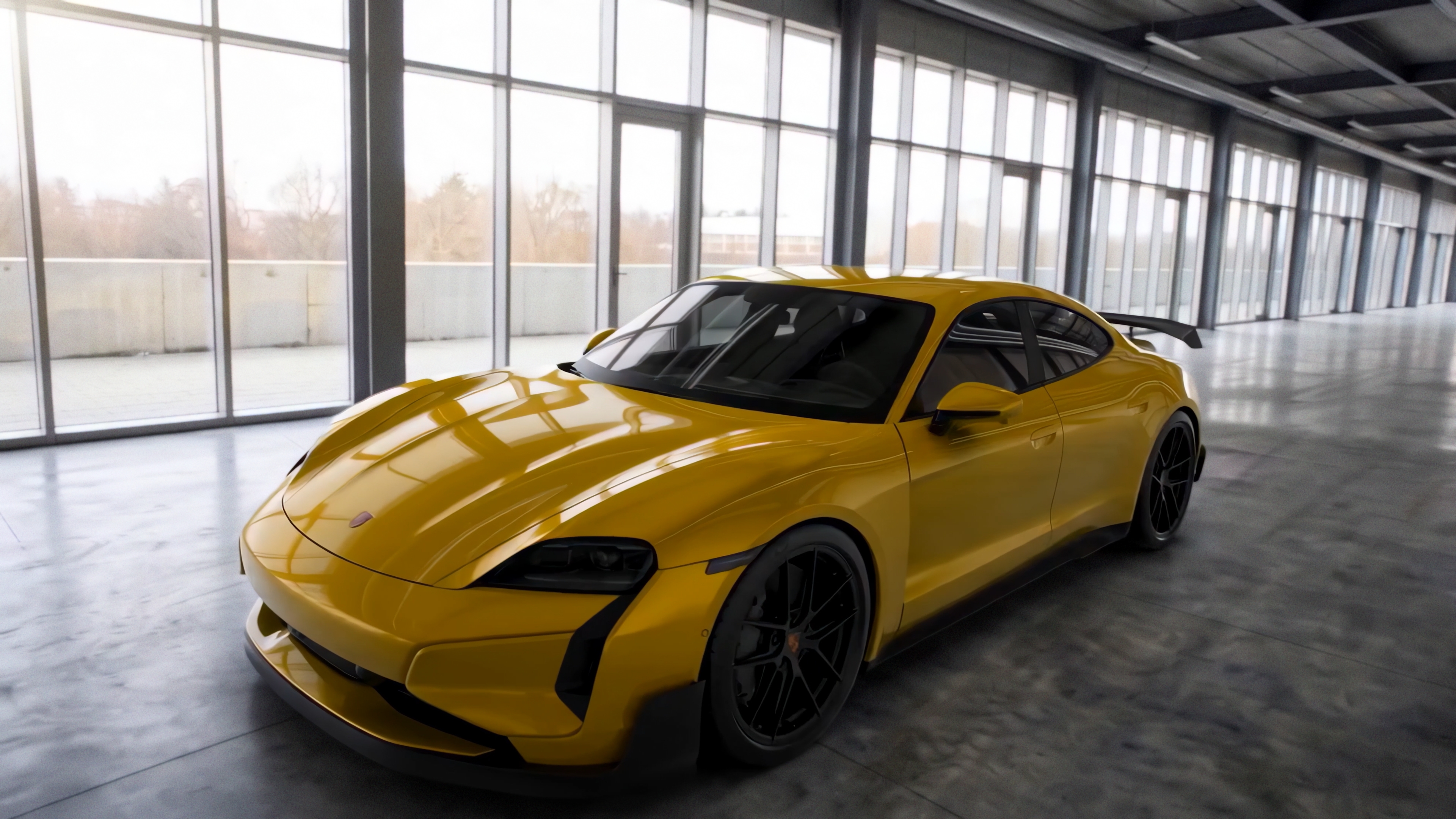
Hololight Stream rendering a luxury automotive without exceeding bandwith
Major XR platform update delivers hologram stability, photorealistic rendering, browser-based access, and design review at unprecedented scale
This release is for enterprise organizations that already know XR works and need it to behave like the rest of their stack: stable, scalable, and under their control.”
MUNICH, GERMANY, July 21, 2026 /EINPresswire.com/ -- Hololight, the enterprise infrastructure layer for industrial XR, today introduces significant advances to its three core platform tools: Hololight Stream, Hololight Hub, and Hololight Space. The release sets a new performance standard for enterprise XR streaming, delivering sub-50ms* hologram stability, photorealistic rendering on any headset, and design review at a scale that has historically been achievable only on dedicated desktop visualization workstations.— Florian Haspinger, Co-founder and managing director, Hololight
“Most XR vendors are still trying to convince enterprises the technology works. We are past that conversation,” said Florian Haspinger, Co-founder and Managing Director of Hololight. “This release is for the organizations that already know it works and need it to behave like the rest of their enterprise stack: stable, scalable, and under their control.”
Hololight Stream: Stability, Image Quality, and Persistent Alignment
The centerpiece of the Stream update is a fundamental redesign of hologram stability, with end-to-end latency that stays under 50ms*. Digital models remain anchored in physical space regardless of user movement, and stability holds even when an application drops to lower frame rates — a critical difference for manufacturing and aerospace environments where technicians work around physical equipment.
Image quality has been overhauled at the rendering level. Stream now delivers ultra high display resolution to each headset at refresh rates up to 90fps. Ray tracing, realistic lighting, and reflections run on external NVIDIA RTX hardware and stream to the headset in real time, so photorealistic scenes reach the device exactly as rendered, regardless of the headset’s own processing limits.
Scene alignment is now persistent across every user and session. Once an alignment point is set, the digital model returns to that exact position for every subsequent user without recalibration, removing a meaningful operational burden for programs where multiple teams or shifts share the same XR session.
Hololight Hub: Browser Access and Enterprise-Scale Administration
The most significant addition to Hololight Hub is Portal, a browser-based interface that allows users to operate Hub applications from any device without a headset. Engineers can load models, configure scenes, and prepare sessions from a laptop or tablet, and additional participants can join a live session through Portal to observe and contribute. Portal is included in the standard Hololight Hub license.
Administrative capabilities have been substantially expanded in response to enterprise customer feedback. Multi-tenant management with role-based access controls — including user-, app-, and device-level permissions — allows organizations to deploy across departments, teams, and external partners while maintaining appropriate oversight. A new session scheduler and usage tracking system give IT administrators and operations leaders the visibility and control required for enterprise-scale rollout.
Hololight Space: Design Review at 400,000-Part Scale*
Hololight Space has received a rendering overhaul that substantially closes the fidelity gap that has made some engineering teams hesitant to move design review into XR. Realistic reflections, accurate shadows, and high-fidelity material rendering combine with dramatically expanded file support. Fluent experiences are now possible with scenes up to 100,000* parts; on high-end workstations, scenes up to 400,000* parts are supported, a significant increase over previous versions.
Command Center changes how scenes are prepared and how teams collaborate. Scene setup now happens at a workstation with mouse and keyboard before the headset is involved, enabling a new collaborative model: one operator works from the workstation while a second participant experiences the scene in the headset, allowing guided review without requiring both parties to be headset-equipped.
Snapshots, introduced as an experimental feature in this release, allows users to save and load scene states and organize them into a navigable series, including the positions of all 3D models, annotations, and measurements. The feature is a preview of a more fully developed capability planned for a future release.
About Hololight:
Hololight is the enterprise infrastructure layer for industrial XR. By streaming pixels rather than transferring data, Hololight gives organizations a secure, scalable, and hardware-agnostic standard for deploying AR and VR at scale. Hololight’s platform is trusted by partners including NVIDIA, Autodesk, and Microsoft, and by customers including BMW and BASF. Hololight is headquartered in Munich, Germany.
*Latency and part-count figures reflect performance under specific network, hardware, and scene configuration conditions and may vary by deployment.
Chris Prouty
Chatter Republic for Hololight
Chris@chatterrepublic.com
Legal Disclaimer:
EIN Presswire provides this news content "as is" without warranty of any kind. We do not accept any responsibility or liability for the accuracy, content, images, videos, licenses, completeness, legality, or reliability of the information contained in this article. If you have any complaints or copyright issues related to this article, kindly contact the author above.
