

Helium Leak Detection for CCIT: Improving Measurement Reliability Through Open-Container Test Configurations
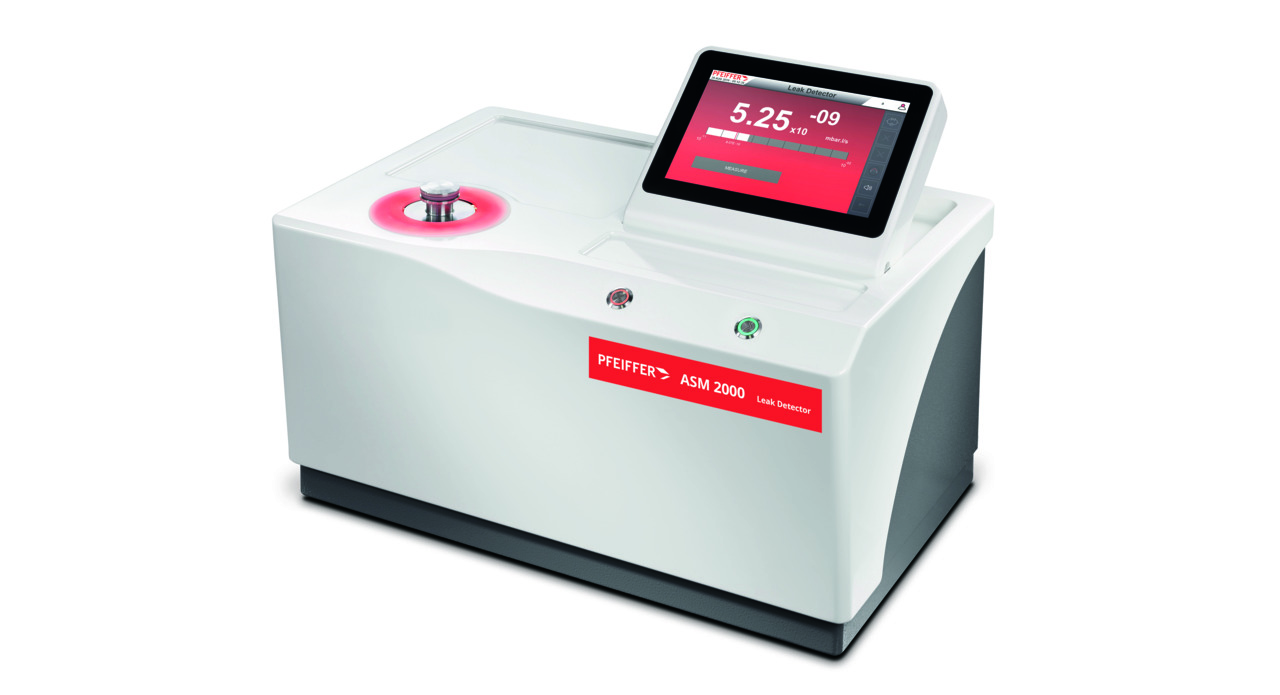
The ASM 2000 offers high helium pumping speed, an integrated automatic helium charging module, and optimized internal volumes. These features ensure high-performance measurements on helium-filled sealed containers and open sub-assemblies.
Open-container helium leak testing improves CCIT accuracy, repeatability, and sensitivity for reliable pharmaceutical packaging integrity validation.
ASSLAR, GERMANY, April 27, 2026 /EINPresswire.com/ -- Container closure integrity testing (CCIT) is a critical element in the validation and quality control of sterile pharmaceutical packaging systems. Regulatory guidance such as USP <1207> encourages the use of deterministic methods capable of detecting defects that may compromise sterility assurance. In this context, quantitative leak-rate measurement has become an essential parameter for evaluating container integrity.
Helium mass spectrometry is widely recognized as one of the most sensitive analytical techniques available for container closure integrity testing. The combination of helium as a tracer gas and highly selective mass spectrometry detection enables the identification of extremely small leak paths that are relevant for sterile pharmaceutical products.
Helium leak detection as a reference method in CCIT
The suitability of helium as a tracer gas is based on several physical properties. Helium atoms are extremely small, allowing them to penetrate very narrow leak paths. In addition, helium is chemically inert and present only in very small concentrations in ambient air. This combination enables highly selective and sensitive detection by mass spectrometry.
As a result, helium leak detectors can measure extremely small leak rates and provide quantitative data about container integrity. This capability makes helium testing particularly valuable during packaging development and validation activities where detection sensitivity must exceed the leak rates associated with microbial ingress.
For these reasons, helium mass spectrometry is frequently used as a reference method when establishing maximum allowable leak limits and when investigating the integrity of container closure systems.
Measurement challenges in conventional closed-container testing
In many helium-based CCIT approaches, containers are filled with helium prior to testing. The sealed container is then placed inside a vacuum chamber, and escaping helium is detected by the mass spectrometer.
While this method provides very high sensitivity, several factors can influence the reliability and reproducibility of the measurement.
One important parameter is the helium concentration inside the container. Variations in filling procedures can lead to differences in tracer gas concentration and therefore affect the measured leak rate. Thus, the helium concentration has to be measured after the leak test to verify and correct the results.
Another challenge is helium permeation through packaging materials such as elastomers or polymer components. Helium can diffuse through these materials and create background signals that complicate the interpretation of measurements, especially when evaluating extremely small leak rates.
Large defects may also affect measurement reliability. In such cases helium can escape from the container before the measurement begins, reducing the tracer gas concentration available for detection or even leading to false negatives when all helium escaped prior testing. Additionally, a high number of large defects throughout the day leads to an increased helium pollution in the testing environment. Further limiting sensitivity and measurement accuracy.
Finally, conventional test procedures often require several manual preparation steps such as helium filling and sealing. These steps may introduce variability between tests and influence measurement repeatability.
Open container helium testing for Improved measurement reliability
An alternative test strategy involves performing helium leak detection with the container in an open configuration. In this approach, the container is connected to the leak detector and filled with helium during the measurement process. This method offers several advantages in terms of measurement reliability and reproducibility.
First, the helium concentration can be precisely controlled in the test environment rather than inside the container. This eliminates uncertainties related to tracer gas filling procedures and improves comparability between tests.
Second, the measurement is less affected by helium permeation through packaging materials. Since the tracer gas is applied during the test phase, diffusion through container materials does not influence the measurement signal.
Third, the number of preparation steps required before testing is significantly reduced. This decreases operator influence and improves repeatability. In addition, the verification step after the leak test is unnecessary.
Helium leak detection with the ASM 2000
Helium leak detectors such as the ASM 2000 combine highly sensitive mass spectrometry with optimized measurement configurations suitable for pharmaceutical testing environments. The integrated tracer gas management allows to test helium prefilled, but also open containers with its respective advantages.
The system enables quantitative measurement of leak rates and allows reliable detection of extremely small defects in container closure systems. This capability is particularly relevant during packaging development, validation studies, and integrity investigations where high sensitivity and reproducibility are required.
By providing stable measurement conditions and precise leak rate quantification, helium mass spectrometry supports the reliable assessment of packaging integrity under demanding pharmaceutical requirements.
Conclusion
Helium mass spectrometry remains one of the most powerful analytical techniques for container closure integrity testing due to its exceptional sensitivity and quantitative measurement capability.
However, the reliability of helium testing depends not only on detector sensitivity but also on the design of the test configuration. Open-container testing approaches can significantly reduce sources of variability associated with tracer gas preparation and permeation effects.
When combined with high-performance helium leak detectors such as the ASM 2000, these approaches provide a robust and reproducible method for evaluating container closure integrity in pharmaceutical packaging systems and support compliance with increasingly stringent regulatory expectations.
Dr Sandra Thirtle-Höck
Busch Group
+49 64 418021460
email us here
Visit us on social media:
LinkedIn
Legal Disclaimer:
EIN Presswire provides this news content "as is" without warranty of any kind. We do not accept any responsibility or liability for the accuracy, content, images, videos, licenses, completeness, legality, or reliability of the information contained in this article. If you have any complaints or copyright issues related to this article, kindly contact the author above.
