

Germany Pigeon Pea Market Driven by Plant Protein Demand; Bühler Group, Ebro Foods, ,Olam Group
Pigeon Pea Market
Rising Adoption of Alternative Proteins and Packaged Pulses Positions Germany as a Key European Growth Hub Through 2036
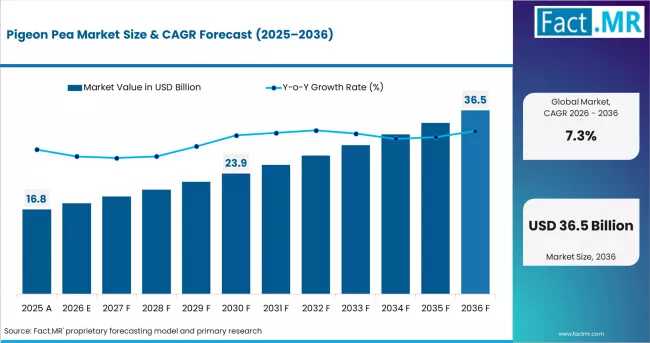
ROCKVILLE, MD, UNITED STATES, April 17, 2026 /EINPresswire.com/ -- According to Fact.MR analysis, the global pigeon pea market is projected to grow from USD 16.8 billion in 2026 to USD 34.0 billion by 2036, at a CAGR of 7.3%, with Germany emerging as a strategic European consumption and processing hub, growing at 6.7% CAGR during the same period. The Germany pigeon pea market is witnessing steady expansion as demand for plant-based protein ingredients and packaged pulse products continues to rise across food processing and retail sectors. The market is transitioning from bulk imports of raw pulses toward processed, standardized, and retail-ready pulse ingredients, driven by evolving dietary patterns and increasing demand for sustainable protein alternatives.Get detailed market forecasts, competitive benchmarking, and pricing trends https://www.factmr.com/connectus/sample?flag=S&rep_id=14752
Quick Stats – Germany
Projected CAGR (2026–2036): 6.7%
Market Role: High-value consumption and processing hub in Europe
Leading Segment: Food & Beverages (~70% share)
Leading Form: Dried Pigeon Pea (~60% share)
Key Growth Driver: Plant-based and clean-label food demand
Key Players: Bühler Group, Ebro Foods, Olam Group Limited, Roquette Frères, COFCO Corporation
Executive Insight for Decision Makers
Germany’s pigeon pea market is shifting toward a value-driven, processing-oriented ecosystem.
Food manufacturers must integrate pigeon pea into plant-based formulations and functional foods
Processors should invest in advanced milling, grading, and ingredient standardization technologies
Investors should focus on plant protein innovation and supply chain localization
Failure to adapt to clean-label trends and alternative protein demand may limit growth opportunities in Europe’s evolving food landscape.
Market Dynamics
Key Growth Drivers
Increasing demand for plant-based and alternative protein products
Growth in vegan and flexitarian dietary trends
Expansion of processed and packaged pulse-based foods
Strong regulatory push for sustainable food systems in Europe
Key Restraints
Heavy reliance on imported raw pigeon pea supply
Higher processing costs compared to conventional pulses
Limited awareness compared to lentils and chickpeas
Emerging Trends
Integration into meat substitutes and protein blends
Growth of organic and certified pulse products
Adoption of advanced grain processing technologies
Increasing demand for clean-label packaged foods
Segment Analysis
Food & Beverage Segment dominates with ~70% share, driven by processed food applications
Dried Pigeon Pea leads with ~60% share due to storage and processing efficiency
Application Breakdown
Plant-based food products
Ready-to-eat and ready-to-cook meals
Pulse-based flours and protein ingredients
Strategic Importance
Segments linked to ingredient processing and food innovation are key to unlocking premium pricing and long-term market growth in Germany.
Supply Chain Analysis (Critical Insight)
Germany operates as a processing and consumption hub, relying on global supply chains:
Raw Material Suppliers: India, Tanzania, Myanmar
Importers & Traders: European commodity import networks
Processors: Grain processing companies (cleaning, splitting, milling)
Distributors: Retail chains, food ingredient suppliers
End-Users:
Food manufacturers (plant-based products)
Retail consumers (packaged pulses)
Foodservice providers
Who Supplies Whom
Global producers export pigeon pea → European importers supply German processors → processors create standardized ingredients → food companies incorporate into products → retailers deliver to consumers.
Companies with integrated sourcing and processing capabilities hold a competitive advantage in ensuring quality and supply consistency.
Pricing Trends
Commodity Imports: Price-sensitive, influenced by global supply and trade conditions
Processed Products: Premium pricing due to value addition and certification
Key Influencing Factors
Import costs and logistics
Processing and packaging expenses
Organic and sustainability certifications
Demand from plant-based food manufacturers
Margin Insights
Bulk imports: Low margins
Processed ingredients: High-margin, innovation-driven pricing
Regional Analysis – Germany in Europe Context
Germany stands as a key growth engine within Europe, supported by:
Strong plant-based food industry
Advanced food processing infrastructure
High consumer awareness of sustainability and nutrition
Developed vs Emerging Comparison
Germany (Developed Market): Value-driven, innovation-focused growth
Emerging Markets: Volume-driven consumption and production growth
Germany’s role is increasingly centered on value addition rather than raw consumption.
Competitive Landscape
The Germany pigeon pea market is moderately fragmented, with a mix of global suppliers and regional processors.
Key Players
Bühler Group
Ebro Foods
Olam Group Limited
Roquette Frères
COFCO Corporation
Competitive Strategies
Investment in processing technologies
Expansion of plant-based ingredient portfolios
Strengthening import and sourcing networks
Focus on quality certifications and sustainability
Strategic Takeaways
For Manufacturers
Focus on plant-based product innovation
Develop high-quality pulse ingredients
For Investors
Invest in European plant protein value chains
Target companies with processing and innovation capabilities
For Marketers/Distributors
Position pigeon pea as a sustainable protein alternative
Leverage health and clean-label trends
Future Outlook
Germany’s pigeon pea market will continue evolving as part of the broader European plant protein ecosystem.
Rising integration into alternative protein products
Growth in premium and organic pulse segments
Increased investment in processing technologies
The market will shift toward high-value, innovation-driven applications, rather than commodity trade.
Conclusion
Germany is emerging as a strategic processing and consumption hub in the global pigeon pea market, driven by sustainability trends and plant-based food demand.
Stakeholders who align with innovation, quality standards, and supply chain integration will secure long-term competitive advantage.
Why This Market Matters
Germany’s focus on sustainable nutrition and alternative proteins positions pigeon pea as a critical ingredient in the future of food, bridging global agricultural supply with European food innovation.
Unlock 360° insights for strategic decision making and investment planning: https://www.factmr.com/checkout/14752
To View Our Related Report:
Pigeon Pea Flour and Protein Market https://www.factmr.com/report/pigeon-pea-flour-and-protein-market
Pea Starch for Clean-Label Confectionery Applications Market https://www.factmr.com/report/pea-starch-for-clean-label-confectionery-applications-market
Pea Milk Market https://www.factmr.com/report/5346/pea-milk-market
Pearl Extract Market https://www.factmr.com/report/pearl-extract-market
S. N. Jha
Fact.MR
+1 628-251-1583
email us here
Legal Disclaimer:
EIN Presswire provides this news content "as is" without warranty of any kind. We do not accept any responsibility or liability for the accuracy, content, images, videos, licenses, completeness, legality, or reliability of the information contained in this article. If you have any complaints or copyright issues related to this article, kindly contact the author above.
