

Acidified Whey Protein Industry Trends 2026–2036; Arla Foods, Lactalis, Hilmar, Saputo Key Players
Acidified Whey Protein Market by Form (Isolates, Hydrolysates and Concentrates), By Nature, By Application and By Region - Global Market Insights 2025 to 2035
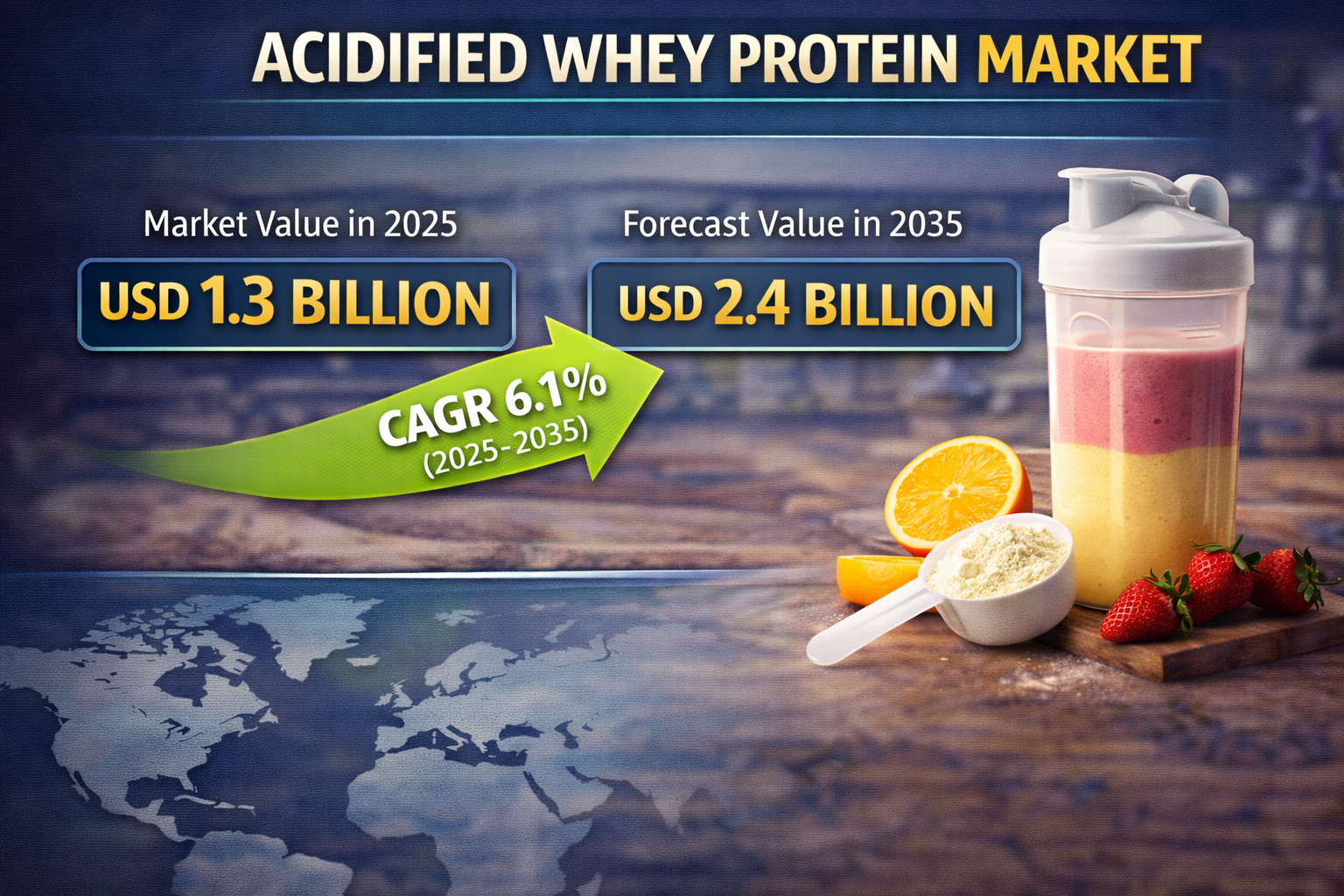
ROCKVILLE, MD, UNITED STATES, April 13, 2026 /EINPresswire.com/ -- According to Fact.MR’s latest analysis, the global acidified whey protein market is valued at USD 1.32 billion in 2026 and is projected to reach USD 2.41 billion by 2036, expanding at a CAGR of 6.2%.𝗚𝗲𝘁 𝗗𝗲𝘁𝗮𝗶𝗹𝗲𝗱 𝗠𝗮𝗿𝗸𝗲𝘁 𝗙𝗼𝗿𝗲𝗰𝗮𝘀𝘁𝘀, 𝗖𝗼𝗺𝗽𝗲𝘁𝗶𝘁𝗶𝘃𝗲 𝗕𝗲𝗻𝗰𝗵𝗺𝗮𝗿𝗸𝗶𝗻𝗴, 𝗮𝗻𝗱 𝗣𝗿𝗶𝗰𝗶𝗻𝗴 𝗧𝗿𝗲𝗻𝗱𝘀: https://www.factmr.com/connectus/sample?flag=S&rep_id=4124
The market is expected to generate an incremental opportunity of approximately USD 1.09 billion over the forecast period.
The industry is undergoing a structural shift as whey protein evolves beyond traditional powders into acid-stable, beverage-compatible protein systems. Acidified whey proteins enable clear, shelf-stable, high-protein beverages, positioning them at the center of functional drink innovation and sports nutrition expansion.
Quick Stats:
• Market Size (2026): USD 1.32 Billion
• Market Size (2027): USD 1.38–1.42 Billion (estimated)
• Forecast Value (2036): USD 2.41 Billion
• CAGR (2026–2036): 6.2%
• Incremental Opportunity: ~USD 1.09 Billion
• Leading Form: Liquid Acidified Whey Protein – ~54% share
• Leading Application: Functional Beverages – ~46% share
• Fastest-Growing Segment: Sports & Performance Nutrition
• Key Players: Arla Foods Ingredients, Glanbia Plc, Fonterra Co-operative Group, FrieslandCampina, Lactalis Ingredients
Executive Insight for Decision Makers
The market is transitioning from bulk protein supplementation to application-specific functional systems.
• Beverage manufacturers must prioritize clear protein formulation and acid stability
• Ingredient suppliers should invest in customized protein systems for RTD beverages
• Investors should focus on companies with strong beverage application pipelines
Risk: Conventional whey protein suppliers without acid-stability capabilities risk losing share in high-growth beverage segments.
Market Dynamics
Key Growth Drivers
• Rising demand for ready-to-drink (RTD) protein beverages
• Increasing consumer focus on fitness, wellness, and high-protein diets
• Expansion of functional and fortified beverage categories
• Growing popularity of low-fat, high-protein nutrition solutions
Key Restraints
• Higher processing cost compared to standard whey protein
• Stability and formulation challenges in acidic environments
• Competition from plant-based protein alternatives
Emerging Trends
• Growth of clear protein beverages and flavored protein waters
• Development of low-sugar, high-protein formulations
• Increasing use in sports nutrition and recovery drinks
• Innovation in microfiltration and protein stabilization technologies
Segment Analysis
• By Form:
o Liquid acidified whey protein leads (~54%) due to ease of incorporation in beverages
o Powder forms used in dry mixes and supplements
• By Application:
o Functional beverages dominate (~46%)
o Sports nutrition is the fastest-growing segment
• By End-Use:
o Food & beverage manufacturers lead adoption
o Nutraceutical companies expanding usage
Strategic Insight:
Beverage compatibility is the primary value driver, making acidified whey protein a critical ingredient for next-gen functional drinks.
Supply Chain Analysis (Critical Insight)
Value Chain Structure
1. Raw Material Suppliers
o Dairy farms supplying milk
o Cheese manufacturers producing whey as a by-product
2. Protein Processors
o Whey protein extraction and purification companies
o Acidification and stabilization technology providers
3. Ingredient Manufacturers
o Companies producing acidified whey protein systems
4. Distributors
o Ingredient suppliers and B2B distributors
5. End-Users
o Beverage manufacturers (RTD drinks, protein water)
o Sports nutrition brands
o Nutraceutical companies
Who Supplies Whom
• Dairy producers supply raw whey to processors
• Processors convert whey into acidified, beverage-ready protein systems
• Ingredient companies supply to beverage and nutrition brands
Key Insight:
Integration from dairy sourcing to functional ingredient formulation is critical for maintaining quality and margins.
Pricing Trends
• Standard Segment: Basic acidified whey protein for mass beverages
• Premium Segment: High-purity, clear protein systems with enhanced stability
Pricing Influencers
• Milk and whey supply fluctuations
• Processing technology and filtration costs
• Product purity and functionality
Margin Insight
• Premium functional protein systems achieve higher margins (30–45%)
• Commodity whey protein faces price volatility and margin pressure
Regional Analysis
Top Countries by CAGR
• United States – 6.8%
• China – 6.5%
• Germany – 5.9%
• Japan – 5.6%
• India – 6.2%
Regional Insights
• North America: Leading market driven by sports nutrition and RTD beverages
• Europe: Strong dairy infrastructure and innovation in functional foods
• Asia-Pacific: Fastest-growing due to rising health awareness and urbanization
Developed vs Emerging Markets
• Developed markets: Innovation and premiumization-driven growth
• Emerging markets: Volume growth with increasing health awareness
Competitive Landscape
Market Structure
• Moderately consolidated with strong presence of global dairy ingredient companies
Key Players
• Arla Foods Ingredients
• Glanbia Plc
• Fonterra Co-operative Group
• FrieslandCampina
• Lactalis Ingredients
• Hilmar Cheese Company
Competitive Strategies
• Investment in advanced protein processing technologies
• Expansion into functional beverage ingredient solutions
• Strategic partnerships with beverage brands
• Focus on clean-label and high-protein formulations
Strategic Takeaways
For Manufacturers
• Invest in acid-stable protein technologies
• Expand into RTD beverage ingredient solutions
For Investors
• Target companies with strong beverage innovation pipelines
• Focus on functional nutrition segments
For Distributors
• Strengthen presence in functional beverage supply chains
• Provide technical formulation support
Why This Market Matters:
Acidified whey protein represents a key enabler of the next generation of functional beverages. As consumers demand convenient, high-protein, and low-sugar nutrition, this market offers strong opportunities for innovation, differentiation, and long-term value creation.
𝗨𝗻𝗹𝗼𝗰𝗸 𝟯𝟲𝟬° 𝗜𝗻𝘀𝗶𝗴𝗵𝘁𝘀 𝗳𝗼𝗿 𝗦𝘁𝗿𝗮𝘁𝗲𝗴𝗶𝗰 𝗗𝗲𝗰𝗶𝘀𝗶𝗼𝗻 𝗠𝗮𝗸𝗶𝗻𝗴 𝗮𝗻𝗱 𝗜𝗻𝘃𝗲𝘀𝘁𝗺𝗲𝗻𝘁 𝗣𝗹𝗮𝗻𝗻𝗶𝗻𝗴 : https://www.factmr.com/checkout/4124
Related Reports:
Whey Cheese Market: https://www.factmr.com/report/whey-cheese-market
Whey Protein Concentrate Market:https://www.factmr.com/report/1733/whey-protein-concentrates-market
USA Whey Protein Concentrate Industry Analysis: https://www.factmr.com/report/usa-whey-protein-concentrate-industry-analysis
Cultured Whey Products Market: https://www.factmr.com/report/cultured-whey-products-market
About Fact.MR
We are a trusted research partner of 80% of fortune 1000 companies across the globe. We are consistently growing in the field of market research with more than 1000 reports published every year. The dedicated team of 400-plus analysts and consultants is committed to achieving the utmost level of our client's satisfaction.
S. N. Jha
Fact.MR
+1 628-251-1583
email us here
Legal Disclaimer:
EIN Presswire provides this news content "as is" without warranty of any kind. We do not accept any responsibility or liability for the accuracy, content, images, videos, licenses, completeness, legality, or reliability of the information contained in this article. If you have any complaints or copyright issues related to this article, kindly contact the author above.
